(See timesofindia.indiatimes.com/blogs/voices/despite-all-odds-homeopathy-continues-to-gain-popularity; See also World Health Report, WHO Global Atlas of Traditional, Complementary and Alternative Medicine).
So what difference does the use of an alternative medical treatment have to do with the Faith? In the case of homeopathy, quite a lot. Not only is homeopathy capable of harming your body, it is based on occult ideas from its founder, who was a Freemason. It can lead to the acceptance of spiritual ideas antithetical to the One True Church. This post will outline the origin and purpose of homeopathy, as well as expose its physical and spiritual dangers. (In addition to the sources listed below, I have drawn heavily upon many other papers and books on homeopathy, most notably Samuel Hahnemann, Organon of Medicine, 6th edition, reprint [1978]; and Martin Gumpert, Hahnemann: The Adventurous Career of a Medical Rebel [1945]. My post is my compilation and condensation of the pertinent sources. All credit I give to the appropriate authors, and I take credit only for putting their works into a concise and thorough post.---Introibo).
Origin and Purpose of Homeopathy
The word “homeopathy” comes from two Greek words which reflect this basic idea; Homoios, meaning like or similar and pathos meaning pain or suffering. Homeopathic medicine, then, is that substance which produces similar pain or suffering in a healthy person to that experienced by a sick person. According to the British National Health Service (NHS):
Homeopathy is a complementary or alternative medicine. This means that homeopathy is different from treatments that are part of conventional Western medicine in important ways.
It's based on a series of ideas developed in the 1790s by a German doctor called Samuel Hahnemann.
A central principle of the "treatment" is that "like cures like" – that a substance that causes certain symptoms can also help to remove those symptoms.
A second central principle is based around a process of dilution and shaking called succession.
Practitioners believe that the more a substance is diluted in this way, the greater its power to treat symptoms.
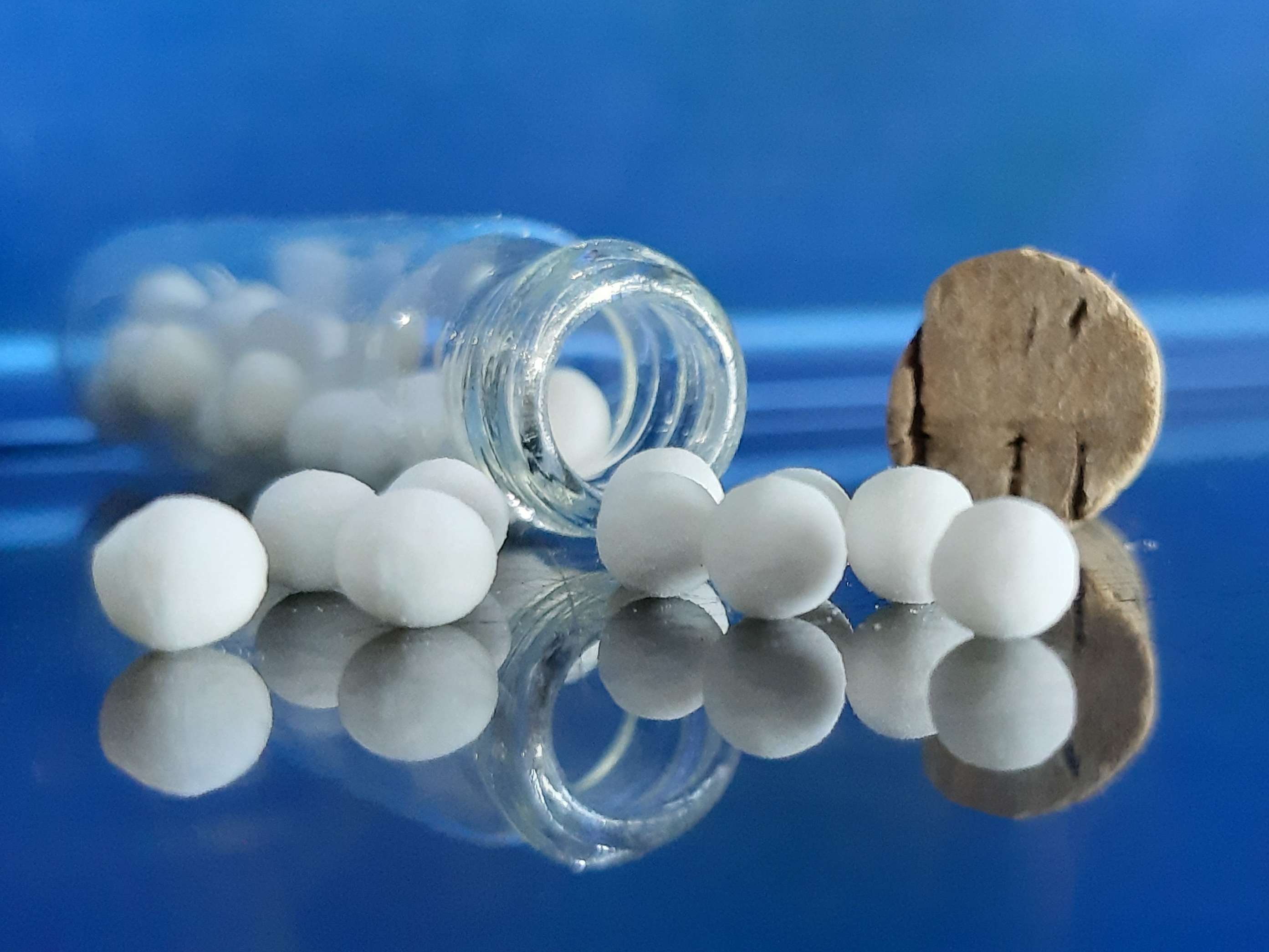
Many homeopathic remedies consist of substances that have been diluted many times in water until there's none, or almost none, of the original substance left.
Homeopathy is used to "treat" an extremely wide range of conditions, including physical conditions such as asthma and psychological conditions such as depression.(See nhs.uk/conditions/homeopathy/#:~:text=Homeopathy%20is%20a%20%22treatment%22%20based,than%20placebos%20(dummy%20treatments; Emphasis mine).
Discovering how homeopathy began is crucial to understanding why it is a false method of diagnosis and treatment. Homeopathy was developed by Samuel Hahnemann (1755-1843). In 1810 Hahnemann published his Organon of the Rational Art of Healing, the “Bible” of classical homeopathy. Editions today are frequently titled Organon of Medicine.
Dr. Hahnemann was translating a book which had described the effects of quinine or Peruvian bark on malaria. Out of curiosity, Hahnemann took the drug himself and discovered that it appeared to cause symptoms similar to malaria: general malaise, chills, fever, etc. Hahnemann was struck with a revolutionary thought: The possibility that a substance which causes symptoms in a healthy person might cure those symptoms in a sick person. He therefore continued testing this idea on other substances using himself, his friends, and his family as subjects. Believing the results confirmed his theory, he developed the basic theory of homeopathy: “like cures like.” In other words, any substance producing symptoms in a healthy person similar to those symptoms in a sick person will cure the sick person. The idea was born from this experience and Hahnemann's occult ideas he received from Freemasonry.
In 1774, Samuel Hahnemann, a 19-year-old with very little money, left his home, in Meissen, Germany, for Leipzig University to study medicine. Although he tried to earn money as a translator, making ends meet was very difficult for him. On the brink of starvation, he was introduced to an opulent Transylvanian baron, Samuel Brukenthal, the head of the Madgeburg Freemasons' Lodge. Hahnemann was initiated into the Lodge in Hermannstadt, Transylvania, in October 1777 (one of the first Lodges). He quickly came to esteem the many itinerant "teachers of mysteries" who were indoctrinating the Lodges in such matters as alchemy and spiritism. The next section deals with the dangers to your Faith inherent in homeopathy.
Occult "Energy"
Hahnemann never even attempted to explain scientifically how "medicine," diluted to a point in some cases where there's almost nothing left of the substance, makes it "stronger." This is one of the two key points of homeopathy:
- “Like cures like”—the notion that a disease can be cured by a substance that produces similar symptoms in healthy people.
- “Law of minimum dose”—the notion that the lower the dose of the medication, the greater its effectiveness. Many homeopathic products are so diluted that no molecules of the original substance remain.
(See nccih.nih.gov/health/homeopathy; Emphasis mine).
How can a substance that, in some cases, is literally no longer present be stronger than when it's present? How can a dilute substance be stronger than the same substance less diluted? Hahnemann has formulated a whole doctrine explaining this logical impossibility. First, he considers man as a tripartite being composed of:
- will and thought (the inward man)
- vital energy, spirit substance or immaterial essence (the ethereal body of the occult anthroposophists, the god Prana of the Hindus)
- the body which is material
Here is Hahnemann in his own words taken from Organon of Medicine:
- In the state of health, the dynamistic, immaterial, vital energy, animating the material part of the human body, reigns absolutely
- A person becomes ill when a diseased agent infiltrates the body and disturbs the vital energy by dynamistic influence
- It’s only when the vital principle is troubled by a diseased element (that is to say by the intrinsic nature of a virus in the form of incorporeal substance) that it emits reactions and symptoms of disease (Emphasis in all these quotes mine).
Here's the really disturbing part. To find the cure for a malady, that’s to say, the herb for the original tincture of the preparation, the researchers often have recourse to occult practices such as the pendulum. Dr. A. Voegeli, a famous homeopathic doctor, has confirmed that a very high percentage of homeopaths work with the pendulum. There are groups whose research is carried out during seances, through mediums who seek information from spirits. (See alopsis.gr/afieroma/af-homeopathy-examined-h-j-bopp-m-d-neuchatel-switzerland). Moreover, Hahnemann, like many homeopaths today utilize Masonic and occult mixing-and-shaking rituals with pendulums and invocations of spirits.
Hahnemann held to many and varied occult teachings in addition to those in the Masonic Temples. He rejected Christianity, identified with Eastern religions, and took Confucius as his model. One biographer says, “The reverence for Eastern thought was not just Hahnemann’s personal hobby, but rather the fundamental philosophy behind the preparation of homeopathic remedies” (See Samuel Pfeifer, Healing at Any Price, [1988], p. 68). He was a follower of Emanuel Swedenborg, who taught his followers to enter an alternative state of consciousness in order to commune with spirits. Hahnemann called the occultic practices of Franz Mesmer “a marvelous, priceless gift of God” by which “the vital energy of the healthy mesmerizer endowed with this power [can be brought] into another person dynamically” (See Organon of Medicine, 6th edition, pp. 309, 311). Hahnemann held to the panentheist view that God is in all things, like the soul is in the body.
Maleficium
While the homeopathic "medicine" may contain none of the substance because it was diluted into nothing, it may contain maleficium, a Latin term for any magickal act intended to cause harm. According to theologian Szymanski, "Maleficium (occult potions, powders, and other substances) placed in food or drink can cause possession. The devil has his agents who prepare these diabolical substances by which he [Satan or a demon] is able to enter human and animal bodies." (See The Truth About The Devil, [1944], pg. 20). The same would no doubt hold true of "medicine" containing maleficium made during "Masonic and occult mixing-and-shaking rituals with pendulums and invocations of spirits."
Harmful to the Body
Here is a perfect evaluation of how homeopathy is either ineffective (at best) and harmful (at worst) to your bodily health:
Homeopathy claims to use only “natural” substances. This is an attempt to contrast itself with conventional medicine. For example, homeopathic remedies include raw bovine testicles, crushed honey bees (Apis mellifica), Belladonna (deadly nightshade), cadmium, sulfur, poison nut (Nux vomica), hemlock (Conium), silica (Silicea), monkshood (Aconite), salt (Natrium mur), mountain daisy (Arnica), venom of the Bushmaster snake (Lachesis), arsenic (Arsenicum album), Spanish fly (Cantharis), rattlesnake venom (Crotalus horridus), Ipecac (Ipecacuahna), dog milk (Lac canidum), poison ivy (Rhus toxicodendron), and more. Some of these substances are quite harmless, but others can be toxic (especially at D4 and lower dilutions).
How did Hahnemann know that a remedy was appropriate for a particular disease (actually for a particular symptom)? Hahnemann and his students tested remedies on themselves. They would eat various plant, animal, and mineral substances and carefully observe what symptoms occurred. This is called “proving.” These reactions (or symptoms) were collected together into a book Materia Medica. For example, one of the symptoms of Pulsatilla (windflower) is “An unpleasant message makes him deeply sad and depressed after 20 hours.” During provings, the people knew which substance they were taking. This is a problem because one might anticipate a certain reaction or exaggerate some symptom.
Today, in modern science, we try to prevent this bias by not letting the person know what he or she is taking — a “test-blind” procedure. When evaluating symptoms, it is also important that the researcher does not know which remedy is being tested (a double-blind procedure) because the researcher can also be biased.
One recent German study did compare a remedy (Belladonna C30) to a placebo. Those who received the placebo reported even more symptoms than those who received the remedy. The symptoms reported included minor aches and pains in various parts of the body. Did the patient mistakenly assume that a normal ache or pain must be related to the remedy? It is possible that the ache or pain was the result of a confounding factor such as not enough sleep.
As we can see, homeopathy is not concerned with the disease. It concentrates on the symptoms reported by the patient. Homeopathy then matches these symptoms to those symptoms that a remedy causes in a healthy person. By contrast, scientific bio-medicine uses symptoms to identify the disease and then treats the disease itself.
Research
There are two points of view about homeopathy that are in conflict. One viewpoint says that homeopathy should not attempt to meet the rigorous requirements of scientific medicine. It is sufficient that there have been millions of satisfied patients during the last 200 years. Science is not relevant anyway because it rejects the concept of the energy of the “vital force” which is essential to homeopathy. This vital force is identical to the concept of vitalism — a primitive concept used to explain health and disease. And, besides, scientific medicine is unfairly prejudiced and biased against homeopathy. Dana Ullman, a leading spokesman for American homeopathy, says that personal experience is much more convincing than any experiments. The emphasis on experience shows that most people simply do not understand that good science, based upon experiments, is essential to the development of knowledge.
The second viewpoint is that scientific research is necessary if homeopathy is to be accepted by medicine and society. In the past 15 years many experimental studies have been done to examine homeopathic remedies. Two reviews of homeopathy are perhaps the best known.
J. Kleinjen, P. Knipschild, and G. ter Riet examined 107 controlled clinical trials of homeopathy. They concluded that the evidence was not sufficient to support the claims of homeopathy. C. Hill and F. Doyon examined 40 other clinical studies. They also concluded that there was no acceptable evidence that homeopathy is effective. Since the above reviews were written, four more research studies have appeared.
In 1992 the homeopathic treatment of plantar warts (on the feet) was examined. The homeopathic treatment was no more effective than a placebo.
A report in May 1994 examined the homeopathic treatment of diarrhea in children who lived in Nicaragua. On Day 3 of treatment the homeopathic group had one less unformed stool than the control group (3.1 Vs 2.1; p <.05). However, critics pointed out that not only were the sickest children excluded, but there were no significant differences on Days 1, 2, 4, or 5. This suggests that the conclusion was not valid. Further, there was no assurance that the homeopathic remedy was not adulterated (contaminated). Finally, standard remedies which halt diarrhea were not used for comparison purposes...
Sometimes we can learn much about a topic by examining who or what it associates with. In the first 100 years, homeopathy was closely associated with many pseudosciences including Mesmerism and phrenology. In the United States, many early homeopaths were members of the mystical cult of Swedenborgianism. Unfortunately, this has not changed today... Many homeopaths use iridology, reflexology, dowsing, and electrodiagnosis. None of these methods has scientific validity. In America, if you want to learn more about homeopathy, the best place to go is to any New Age bookstore or meeting place.
(See quackwatch.org/homeopathy/articles/wagner).
Conclusion
Homeopathy is bad "medicine" that can harm both your body and (more importantly) your soul. Do not seek the services of some homeopath and warn anyone who does go of the inherent peril. None of the claimed evidences offered in support of homeopathy, theoretical or practical, proves that homeopathy is an effective medical procedure. Not only does homeopathy fail to operate under the principles of scientific medicine, it may cause bodily harm and involve one, unwittingly, in the occult that can lead to demonic possession.
Addendum: Did True Popes Give Approval To Homeopathy?
A reader/commenter wrote an often used story of homeopaths, namely, that several true popes used homeopathy and gave honor to homeopathic doctors. I said it was false and calumnious--not on the part of the commenter, but of the homeopaths that spread these stories. There are several major problems. It is alleged that different popes used homeopathy. All of the sources I've seen are from homeopaths.
Moreover, the popes who allegedly used or approved homeopathy vary. The list of popes includes Popes Gregory XVI, Pius IX, St. Pius X, Pius XI, Pius XII, and false pope Wojtyla. For obvious reasons, I will not count Wojtyla.
Problems:
1. During this era of history (from Gregory XVI to St. Pius X), doctors employed methods such as bleeding and blistering to cure patients, or they relied upon herbal mixtures of one kind or another because they had not yet developed methods for creating effective medicines. Many put any herbal remedy under the umbrella term "homeopathy," although it wasn't actually such. There is still confusion about the two today. (See fullcirclewomenshealth.com/blog/mind-body-spirit/2013/12/29/hello-world-2/).
2. Homeopaths cite...each other! In this particular homeopathic website sueyounghistories.com, gives the follow "proof" of approval from Pope Pius IX:
(a) Ferdinand de Lesseps was a negotiator for Pope Pius IX. It links to a Wikipedia page on de Lesseps, and it does not state that he was a homeopathic practitioner, or that he used homeopathy. Note that he was a negotiator for Pope Pius IX, not an ersatz doctor or medical consultant. Even if, ad arguendo, he used/practiced homeopathy on the side, how would we know the Pontiff was even aware of such? He was doing negotiations in the diplomatic realm.
(b) Pope Pius IX also granted Alexandre Charge the Order of St. Gregory the Great for travelling to the South of Frace (sic) to treat a major cholera epidemic with homeopathy, and for the exceptional care he provided at this time. The information is taken from a book, The Homeopathic Revolution: Why Famous People and Cultural Heroes Choose Homeopathy, written in 2007 by Dana Ullman, who is one of the biggest promoters and apologists for homeopathy. In turn, The Homeopathic Revolution cites to an 1863 writing by W.F. Hunt, The Condition of Homeopathy in Europe, Transactions of the New York State Homeopathic Medical Society, [1863], pgs. 118–123---another homeopath. In no case is there proof of such an honor bestowed for practicing homeopathy except the ipse dixit of the homeopaths themselves. Even if I stipulate that the event occurred, was the honor for actual homeopathy, or herbal remedies? This is not the kind of "proof" that gives reassurance as to the truth of the statement asserted.
(c) In 1847, Francois Perrussel received a special apostolic letter from Pope Pius IX in remembrance of his work The Truth in Medicine Found and Demonstrated by the Laws of Universal Attraction. The proof? This link: homeoint.org/seror/biograph/perrussel.htm, which begins, "A Mexican magazine for February 25, 1873, contains the following :" Really? "A certain Mexican magazine"? The page ends with this whopper: "The above has been condensed from very interesting accounts by Drs. Chauvet and Leboucher in the Bibliothèque Homoeopathique, vol. 5." Again, a homeopathic source! If such a letter existed, the contents--verbatim--should be published, and now it could be photographed and published. Maybe we should believe Perrussel got rid of such an honor and/or did not allow its publication?
3. The case of Pope Pius XII.
The pro-homeopathy website:
homeopath.lt/homeopathy_news_information, states The personal doctor of Pius XII was homeopath Galeazzi-Lisi, succeeded by another homeopath professor Negro, who was also the doctor of Paul VI. I found no mention of Dr. Galeazzi-Lisi to have been a homeopath. According to the New York Times, he used a different method of the embalming process using herbs and spices without draining the body of its fluids, "like Christ." He botched the job of embalming Pope Pius XII so badly, the body literally decomposed before the eyes of the mourners. The stench was so acrid that the Swiss Guards could not take it, and Pope Pius' body had to be rotated every 15 minutes.
(See theguardian.com/world/2001/jun/04/catholicism.religion).
Could he have been a homeopath and occultist unknown to the pope, and used his herbs to desecrate the body? Who knows, I'm not a conspiracy theorist, so I won't go there. However, one thing is certain--there is no solid evidence that any true pope endorsed occult homeopathy.---Introibo